 info@mopnmore.com



 15075866363
Blogs
Affordable Magic Mop Options That Deliver Cleaning Results
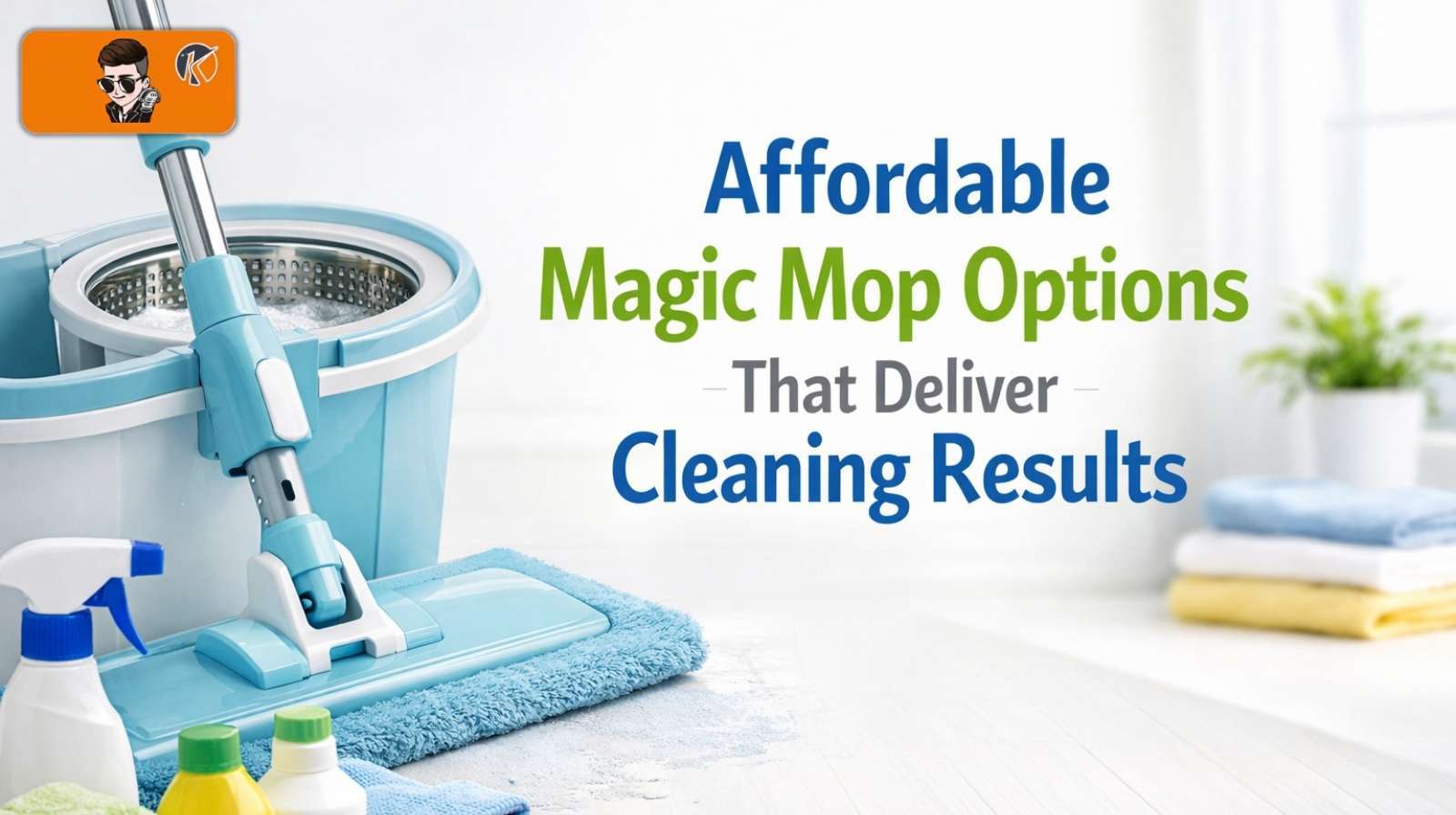
When you are new to cleaning supplies procurement, “mops” can look like a simple commodity. In practice, the wrong selection leads to slow cleaning, higher chemical use, inconsistent results, and a steady stream of replacement requests that waste time. That is why many facilities and cleaning contractors consider “magic mop” systems: not because they are trendy, but because they can standardize performance across shifts and sites while keeping operating costs predictable.
What Is a Magic Mop?
A “magic mop” is usually a general term suppliers use for a modern mop system designed to clean efficiently with less effort than a traditional string mop. Several types of mops deliver higher user-friendliness compared to traditional mop and can be included in the definition of magic mop. These can be microfiber spin mop kit, a flat mop with a self-wringing mechanism, or a handle-and-head system that swaps reusable or disposable pads. The term “magic” does not refer to a special chemical or a miracle material; rather it is just an innovative system design.
Such mops perform much more efficiently onsite and users get improved water control, quicker wringing, and better soil pickup (especially with microfiber). If you are doing bulk procurement of cleaning mops for a facility, the important point is that with magic mops, you are buying a repeatable cleaning process, and not just a handle and a mop head.
Key Benefits of Affordable Magic Mops for Commercial Use
Affordable does not have to mean a weak build that breaks easily. In commercial environments, the best value usually comes from products that require less resources to operate, require less downtime, and hold up under daily use. Magic mop systems can deliver those benefits when you match the design to the work your teams actually do.
Get the Best Deals on Magic Mop
Reduced Water and Detergent Consumption
Many modern mop systems are designed to control how much water the head retains and releases onto the floor. Better control here means the mops do not flood surfaces with more water than necessary for cleaning. Traditional mops do that, which results in both water waste and higher cleaning chemical consumption, which is required to be mixed in water. Microfiber heads in particular, can clean effectively with lower chemical concentration than cotton in many everyday scenarios. This is because they lift and absorb more soil, compared to a string mop, which just pushes it around.
Longer Lifespan and Replaceable Mop Heads
A common budget trap is buying a low-cost mop that requires frequent full replacement. Affordable magic mop systems design has two parts: the durable components (handle, frame, wringer mechanism) and the replaceable components (pads or heads) that need to be replaced regularly. If the hardware lasts and the replacement heads are readily available, you can plan costs and avoid emergency purchases that drain the budget by buying a whole mop, which is considerably more expensive. You also reduce downtime because staff can swap a head in seconds instead of hunting for a spare mop or improvising with the wrong tool.
Ergonomic Design to Reduce Worker Fatigue
Worker fatigue in mop usage happens if the mop is not user friendly. The result is clearly apparent in cleaning productivity. Common signs of worker fatigue include a slower cleaning pace, workers requiring longer break times, and non-uniform cleaning results. Many magic mop designs resolve this issue through a build that features lighter handles, smoother wringing, and a head that is quite flexible or movable, requiring less bending and twisting by the user. Those details matter because labor is usually your largest cleaning cost.
If a mop system reduces physical strain, you often see faster cycle times and fewer technique variations between workers. From a risk-reduction standpoint, ergonomic improvements can also support safer operations, particularly in environments with high cleaning frequency such as restrooms, lobbies, kitchens, and healthcare corridors.
Industries That Need Bulk Magic Mops the Most
Magic mops will find the most usage in environments where cleaning is frequently done on a daily basis as, as part of compliance expectations. Janitorial service providers often buy in bulk to standardize kits across crews and simplify replacement logistics.
Another industry where magic mops are essential is the hospitality sector. Here, bulk mop systems are crucial for keeping guest-facing areas squeaky clean without over-wetting floors, since heavy foot traffic requires the floor to dry quickly.
Healthcare and long-term care facilities are another sector where the magic mops come handy. in these environments routine cleaning protocols and fast head changes are necessary to cover different cleaning surfaces and a large coverage area. Food service, commissaries, and back-of-house retail areas benefit from tools that can handle frequent spills while maintaining grip and control. Schools, warehouses, and transit facilities often need durable systems that survive heavy daily use and rough storage conditions.
Types of Affordable Magic Mop Options Available
The right “affordable” option depends on floor type, soil load, and how your staff actually cleans. Your goal is to reduce total cost of ownership, not just to minimize unit price.
Heavy Duty Commercial Magic Mop Sets
Heavy-duty magic mops have a robust construction with a tough handle. The joints are reinforced and the wringer attached in such variants is built for daily commercial cycles. These sets are a good fit for scenarios where the janitorial team cleans large areas continuously, and a mop breakdown can cause disruption in the cleaning schedule seriously affect cleaning efficiency. If you are sourcing these, buy a model that has wide parts availability for wringer baskets, bearings, and connection points that wear out first. A heavy-duty set can be cost-effective if it survives real use, but only if the consumables are priced and stocked for ongoing replacement.
Disposable or Replaceable Head Systems
Replaceable head systems include reusable microfiber pads that can be laundered. Another variant consists of disposable pads that are a much better fit for controlled environments or high-turnover sites. Reusable pads are cost-effective in the long run if you have access to laundering and a process for sorting and tracking. Moreover, disposable pads are much more efficient in cleaning since the risk for cross-contamination is lesser. For procurement of these types of magic mops remember to keep in mind the ground reality of your site. If staff cannot reliably send pads for washing, reusable systems may fail in practice even if they look cheaper on paper.
Features B2B Buyers Should Look for Before Purchasing
When you request quotes, suppliers may offer multiple “equivalent” items. To reduce the risk of getting mismatched products across shipments, you should define the specs that affect performance and compatibility. Start with head material and size, because that drives coverage and soil pickup. Confirm the attachment method and whether heads are proprietary or interchangeable, which affects your long-term sourcing options. Check handle length, weight, and locking mechanism, since handle failure is a common field complaint.
You should also evaluate wringing performance and water control, because over-wet floors create slip risk and slow turnaround. Ask for information on recommended laundering cycles for reusable microfiber, and confirm whether the product can handle your wash temperatures and chemicals. For bulk purchases, lead time and spare parts availability are not “nice to have”; they determine whether you can keep crews equipped without last-minute substitutions.
Comparing Wholesale Magic Mop vs Traditional Cleaning Systems
|
Comparison factor |
Wholesale magic mop system |
Traditional cleaning systems (string mop + bucket/wringer) |
|
Upfront cost |
You often pay more at the start. You buy a matched kit. |
You often pay less at the start. The tools are simple. |
|
Ongoing cost |
You keep buying heads or pads. Cost stays steady when you standardize SKUs and buy in volume. |
You replace mop heads, and you often use more water and chemical. Costs can drift because people improvise and replace whole mops. |
|
Water control and dry time |
You can control moisture better. Floors can dry faster when the tool is used right. |
Floors can stay wet longer. Over-wetting is common when people rush or skip controls. |
|
Cleaning consistency |
Results are easier to repeat. Head changes are quick and the process is more uniform across sites. |
Results vary by worker. Dirty water and uneven technique can undo the work. |
|
Soil pickup and “spreading dirt” |
Many systems lift and hold soil well, especially with microfiber. You still need a clear head-change rule. |
Soil can move from one area to the next if rinse water is not changed often. It can look clean, then fail later. |
|
Productivity |
Wringing is faster and easier. Crews can cover more space in the same time. |
Wringing takes effort. Managing dirty water takes time. Speed depends on the person. |
|
Ergonomics |
Often lighter and easier on wrists and back. Less strain helps over long shifts. |
Often heavier when wet. Wringing and pushing can wear people down. |
|
Training and standard work |
Easier to train. Easier to audit. The kit supports simple SOPs. |
Most people know it, but results are harder to standardize. It needs close supervision to stay consistent. |
|
Inventory and sourcing |
Bulk buying can reduce re-quotes and substitutions. It works best when heads are in stock and specs stay fixed. |
Easy to find basic mops. But quality varies, and parts may not match across brands or shipments. |
|
Best fit |
Multi-site use, contractors, and facilities that need steady results and predictable replenishment. |
Small sites, low frequency cleaning, or teams with tight process control and strong supervision. |
Benefits of Buying Magic Mops in Bulk from a Supplier
Bulk purchasing helps you lock in consistent specifications and reduce the time you spend re-quoting the same items. When you buy in volume, you can often negotiate better pricing on both the hardware and the consumables, which matters because mop heads are the recurring expense. Bulk buying also improves operational continuity. If you standardize on one system, you can stock the same replacement heads across sites, simplify onboarding, and reduce “workarounds” that create uneven cleaning quality.
Another practical benefit is better planning. A supplier relationship can include scheduled deliveries, predictable lead times, and documentation such as product datasheets and care instructions that support your internal SOPs. That reduces the risk of delays when a site runs short or when you need to onboard a new location quickly.
Common Mistakes Businesses Make When Buying Cheap Mops
A frequent mistake is choosing by unit price alone and ignoring durability and consumable costs. Another is failing to confirm compatibility, then discovering that replacement heads are proprietary, out of stock, or only available through one channel at a higher price. Some buyers skip the trial phase and order in bulk, only to find that the wringing mechanism breaks under real use or that the mop head does not handle the actual soil load.
Operational misalignment is also common. A reusable system can be excellent, but it fails if you do not have a process for collecting, laundering, and redistributing pads. On the quoting side, vague specifications lead to apples-to-oranges comparisons and surprise substitutions. If you want to avoid delays and reorders, define key specs, request documentation, and verify lead times before you commit.
Frequently Asked Questions (FAQ’s)
Are affordable magic mops suitable for heavy commercial cleaning?
Yes, if you buy the right build. “Affordable” should not mean weak. Look for strong joints, a handle that does not flex, and a wringer that survives daily use. Test it on your worst floors first. If it holds up there, it will hold up in easier areas.
How often should mop heads be replaced in bulk usage?
Replace heads on a rule, not on a feeling. Tie it to area cleaned, shift length, and soil level. Change sooner when the head stops picking up dirt or starts to smell. For reusable heads, wash them the right way every time. Bad washing shortens life and ruins results.
Can suppliers provide private label magic mop products?
Many can, but you must confirm the details in writing. Ask what changes: packaging, color, logos, or the full product. Also confirm that replacement heads will stay the same over time. Private label is only helpful when the specs stay stable and supply stays steady across orders.
What is the ideal MOQ for wholesale purchases?
The best MOQ is one that protects supply and price without locking up your cash. Start with enough units for a short trial and an initial rollout. Then scale once the tool proves itself. Match MOQ to storage space, head usage rate, and supplier lead time. This prevents overstock and rush buys.
Conclusion
Affordable magic mop options can improve cleaning consistency and reduce procurement headaches when you buy them like investing in a holistic cleaning system that will maintain the floors of your facility and not just a one-time tool. During mop selection your main emphasis should be on water control, replaceable heads, ergonomics, and parts availability. Once you have confirmed that, only then evaluate performance with a short field trial.
Standardizing one or two compatible systems across sites simplifies training and inventory while reducing emergency purchases and last-minute substitutions. When you evaluate total cost of ownership, including head consumption and lead times, you can buy confidently and avoid the common mistakes that waste time and budget.
Important Resources
Contact Mopnmore Team for bulk order