 info@mopnmore.com



 15075866363
Blogs
Industrial Mop Buckets for Warehouses and Manufacturing Units
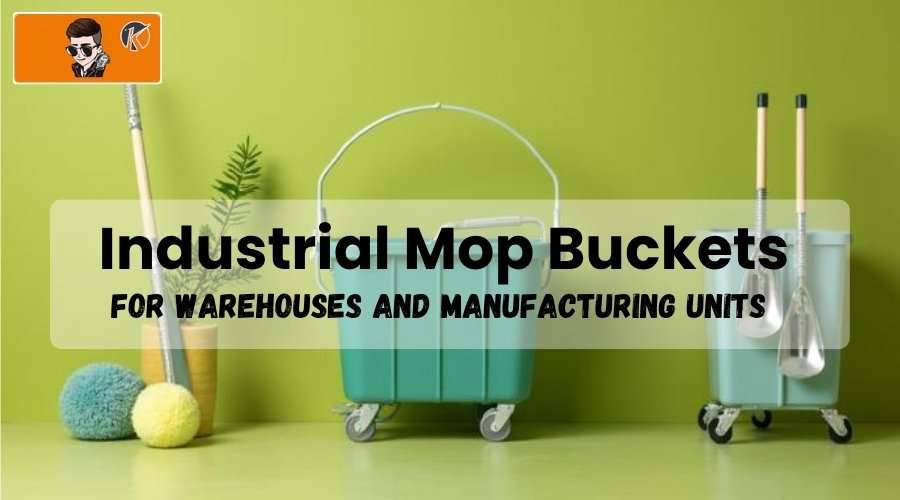
In a warehouse or manufacturing unit, floor cleaning is not a background task. It is part of operational discipline, and daily uptime. When the mop bucket is wrong for the job, the effects show up fast. Cleaning runs slow down. Floors stay wet longer. Equipment breaks sooner. Staff work harder to get weaker results.
That cost adds up. Not just in replacement spend, but in lost time, uneven cleaning quality, and avoidable safety exposure. In active facilities, maintenance teams cannot afford tools that drag down the process. They need tools that hold up, move well, and support fast, controlled cleaning from one zone to the next.
Industrial mop buckets matter because they sit inside the workflow, not outside it. A poor one creates friction every shift. A well-matched one helps teams move faster, clean more consistently, and reduce trouble before it spreads. The point is simple. If the facility depends on clean, safe floors, then the bucket is a purchase that determines operational efficiency.
Industrial Mop Bucket vs Standard Commercial Bucket: What’s The Difference?
A standard commercial bucket may look sufficient on paper. But in a real industrial setting, the spec sheet is just a list of assumptions. Warehouses and manufacturing fcilities place more stress on cleaning tools. The routes are longer and the floor coverage is extensive. Not only that, but the floor conditions are harsher than residential buildings. Weak cleaning performance is simply not tolerated.
Buy Industrial Mop Buckets Now
Industrial mop buckets are built to handle that pressure. They are built sturdier than their residential units with stronger wringers, thicker bucket walls, more durable wheels, and better balance under load. All these features directly affect how well the unit performs during repeated daily use.
The wringer is the component that separated low tier buckets from premium ones. Light-duty systems often leave too much water in the mop head. That slows drying and raises slip risk. In busy facilities, that is a problem that moves quickly from inconvenience to exposure. Better wringing improves control and helps maintenance teams leave the area in a safer condition.
Build quality matters just as much. In manufacturing areas, buckets face stronger chemicals, more impacts, and more demanding routines. A weaker frame or low-grade plastic body may survive light office use but will not hold up well on a production floor.
So the difference is not subtle. A true industrial mop bucket is designed for workload, durability, and repeated performance. That is what maintenance teams need.
Common Cleaning Challenges in Warehouses and Manufacturing Areas
Industrial facilities do not present one cleaning challenge, they present several at once. From oil spills and dust accumulation to high-traffic wear and strict safety requirements, each area demands a different approach. Efficient cleaning solutions must handle heavy-duty use, improve productivity, and maintain hygiene standards while minimizing downtime in operations.
Extensive Floor Area
Floor area is the first issue. Large footprints mean longer cleaning routes, which translates to more refill trips, and more physical strain if equipment is poorly matched to the task.
More Dirt and Difficult to Clean Debris
Then comes the kind of dirt and build up in these facilities. In warehouses, dust, pallet debris, tracked-in dirt, and dock-area grime are common. In manufacturing units, teams may face oil, coolant, fine particulate matter, or repeated spills tied to production activity. This kind of dirt and mess demands stronger extraction, and more durable equipment.
More Traffic on Floor
The nature of traffic on the floor is also very different from that in an office or home. Forklifts move through lanes. Workers cross shared paths. And machinery continues to operate. That means cleaning tools must support quick response and better floor control. If the bucket is unstable or the wringer leaves too much moisture behind, the process becomes slower.
Cleaning Frequency is Higher
Cleaning frequency adds another challenge. Some facilities use mop buckets for brief daily routines while others rely on them across multiple shifts, every day, without pause. Under those conditions, unstable bucket frames, and low-end wringer systems do not last long and fail shortly.
Cleanliness Standards
Cross-contamination is also a concern that should not be overlooked. This becomes more vital where the facility has to adhere to a globally accepted cleanliness standard. Even outside highly regulated sectors, many facilities divide tools by area to keep dirt and residue from moving across zones. That approach only works if the bucket system supports it clearly and consistently.
Types of Industrial Mop Buckets Used in Facilities
Single Compartment Mop Buckets
The single-compartment mop bucket is the most familiar and widely used option. It is easy to deploy, and often suitable for routine cleaning in warehouse areas where the goal is speed and simplicity. That simplicity is useful but it has its limits. Once the water becomes dirty, cleaning quality drops unless the water is changed.
Dual Compartment Mop Buckets
Dual-compartment buckets give cleaning crews more control The clean and dirty water can be separated by compartment, or by solution and rinse water, depending on the setup. That helps maintain better cleaning consistency over longer tasks and supports stronger hygiene habits in demanding environments. These buckets become really useful while handling heavier residue and dirt.
Wringer Style Bucket
Wringer style bucket is another important choice. Side-press wringers are widely used because they are cost-effective. Their built is also versatile enough to fit many standard industrial routines. Down-press wringers often deliver stronger extraction during repeated use. For teams covering large areas or using heavier mop heads, that advantage counts a lot.
Large Capacity Mop Bucket
For wide floor areas of warehouses and manufacturing plants larger-capacity mop bucket and wringer combinations prove to be a better fit. They reduce refill frequency and help teams maintain pace during long cleaning runs. But size alone is not enough. If a larger unit becomes hard to move or unstable when full, the time saved on refills can quickly disappear.
The right choice depends on the floor, the routine, and the level of control the facility needs to maintain.
Key Features Maintenance Teams Should Evaluate Before Buying
|
Feature |
Why It Matters |
What Maintenance Teams Should Look For |
|
Bucket capacity |
Capacity affects how often staff need to stop and refill. In larger facilities, constant refill trips cut into cleaning speed and disrupt workflow. |
Choose a size that matches the floor area and cleaning cycle without creating a unit that is too heavy or awkward to move safely. |
|
Wringer performance |
Good extraction leaves less water on the floor, speeds drying, and reduces the physical effort needed during repeated use. |
Look for a wringer that removes water efficiently and stays dependable under daily pressure. |
|
Material durability |
Industrial settings put constant stress on equipment. Thin or weak plastic will crack faster, especially at high-stress points. |
Prioritize impact-resistant construction that can tolerate repeated use, rough handling, and routine wear. |
|
Caster quality |
A bucket that does not roll well slows the task and increases strain on the user. Poor wheels also fail early. |
Check for heavy-duty casters that move smoothly under load and stay stable on typical facility surfaces. |
|
Stability |
Buckets that tip easily create extra mess, lost time, and preventable safety risk. |
Look for a wide, balanced base and a design that remains controlled when full and in motion. |
|
Ergonomics |
Staff use these tools repeatedly. Poor design increases fatigue and can wear down performance over a shift. |
Choose a unit with practical handle placement, smooth movement, and a wringer action that does not require excessive force. |
|
Chemical compatibility |
Some facilities rely on disinfectants, degreasers, or stronger cleaning agents that can damage weaker materials. |
Confirm that the bucket and wringer components can withstand the chemicals already used in the facility. |
|
Color coding and labeling |
Clear visual separation helps teams follow zone rules and supports cleaner process habits. |
Select systems with clear color options or surfaces that are easy to label by area or task. |
|
Ease of cleaning |
The bucket itself must be cleaned regularly. If it traps residue, it starts working against the process. |
Favor designs with smooth interior surfaces, fewer hard-to-clean corners, and simple rinse-out access. |
|
Replacement part availability |
A failed wheel or wringer should not force a full replacement if the rest of the unit is still sound. |
Buy from suppliers that offer replacement wheels, wringer parts, and other common wear items. |
Matching the Mop Bucket to the Facility Environment
Warehouses
Warehouse cleaning efficiency depends on several factors like distance, movement, and pace. Cleaning crews have to cover long aisles, and broad floor sections in a single shift. That makes mobility and bucket capacity especially important. If the unit is too small, refill trips multiply. If it rolls poorly, time is lost every few minutes.
For warehouse cleaning larger-capacity buckets are often the better fit, especially when crews’ clean wide areas in continuous runs. But that only works if the bucket remains stable and easy to control when full. Strong casters matter here. They help teams move efficiently over concrete, sealed floors.
Top Features to Look for Before Buying a New Magic Mop
Wringer performance is just as important. Warehouses need cleanup that is fast and controlled. Better extraction helps reduce standing water and shortens drying time. That helps in areas where traffic returns quickly. A weak wringer can turn a routine task into a slippage risk.
The practical takeaway is clear. Warehouse teams need a bucket that supports speed without sacrificing control.
Manufacturing Plants
Manufacturing plants bring a different set of demands. The challenge is not only scale. It is the type of dirt, the pace of use, and the need to clean around machinery, tighter paths, or active production areas.
In these environments, material strength becomes fundamental. During cleaning procedures buckets are exposed to oils, more aggressive cleaning products, and repeated heavy use. A dependable wringer and a durable body are essential. If the unit weakens under daily strain, cleaning quality suffers and downtime follows.
At the same time, manoeuvrability cannot be ignored. A bucket that is too bulky may become difficult to control around equipment or in narrower work zones. That is why the biggest option is not always the smartest one. Manufacturing teams need equipment that can keep up without creating its own bottlenecks. That is the standard. Anything less will show up quickly in performance.
Compliance, Hygiene, and Operational Standards to Consider
Facilities with strong housekeeping standards need cleaning equipment that supports repeatable process. That means tools should be easy to identify, easy to clean, and durable enough to remain dependable over time. If a bucket is hard to maintain or a wringer fails often, process discipline starts to weaken around it.
Operational systems such as 5S make this even more practical. Cleaning tools should be easy to assign, easy to store, and easy to return to the right place in the right condition. When the system is clear, staff can follow it consistently. When it is messy or vague, performance slips.
In facilities where hygiene control is tighter, separation becomes more important. Buckets assigned by color, zone, or task help reduce confusion and support better practice. The objective is not complexity. It is clarity. Teams work better when the right tool for the right area is obvious.
Audit readiness often shows up in these details. A well-maintained bucket may seem like a small thing, but it reflects the condition of the broader maintenance program. Clean, functional tools send a message. The facility pays attention. The process is real. Standards are not just written down. They are being carried out. That is where equipment choice becomes more than a purchasing issue. It becomes part of how the operation sustains discipline.
Conclusion
A mop bucket that is built specifically for industrial settings will not only withstand the demands of an entire workday but also support the crew performing those duties by enabling faster cleaning, better water control, and safer flooring, even while working under extreme pressure. For a warehouse, those demands typically consist of increased mobility of the mop bucket, maximum capacity to hold and transport water, and reliable wringing capability to remove all excess liquid at the time of use.
For a manufacturing facility, those demands will usually include improvement in the types of materials used to manufacture the mop bucket, a more dependable method of extracting water, and smoother movement around the active areas in the facility. Regardless of the application, the following performance characteristics are the focus of maintenance teams: performance, control, durability, and ease of use.
When selecting an industrial mop bucket, maintenance teams should evaluate the job, routine, and possible demands for each mop bucket after selecting the type of mop bucket.
Frequently Asked Questions (FAQ's)
What size mop bucket is best for a warehouse?
A warehouse needs a bucket that can go the distance. Too small, and the crew wastes time walking back for water. Too large, and the thing gets heavy and hard to steer. The best bucket is the one that carries enough for the run and still moves well when full. Big helps. Control matters more.
Which wringer type is better for heavy-duty cleaning?
For hard cleaning, a down-press wringer is often the stronger tool. It pulls more water from the mop and does it with less fuss. That means drier floors and faster work. A side-press wringer can still do the job, but under heavy use, it may ask more from the worker. The better wringer is the one that stays strong at the end of a long shift.
Can the same mop bucket be used in both warehouse and production zones?
It can be used in both places. That does not mean it should be. Dirt travels. Residue travels. Problems travel with them. If the facility keeps zones separate, the buckets should stay separate too. One bucket for one area is a cleaner rule, and a safer one.
Important Resources
Browse Latest Collections & Partner With Us
Learn More About Our Expertise
Contact Sales Team & Start Your Bulk Order