 info@mopnmore.com



 15075866363
Pedal driven systems use a foot operated gear mechanism to spin the basket efficiently. These systems are built for rugged use and long term performance, relying on the operator’s muscle memory to maintain consistent speed, control, and overall cleaning efficiency during repeated tasks.

Blogs
Guide for Best Spin Mop for Floor: Pros, Cons and Recommendations
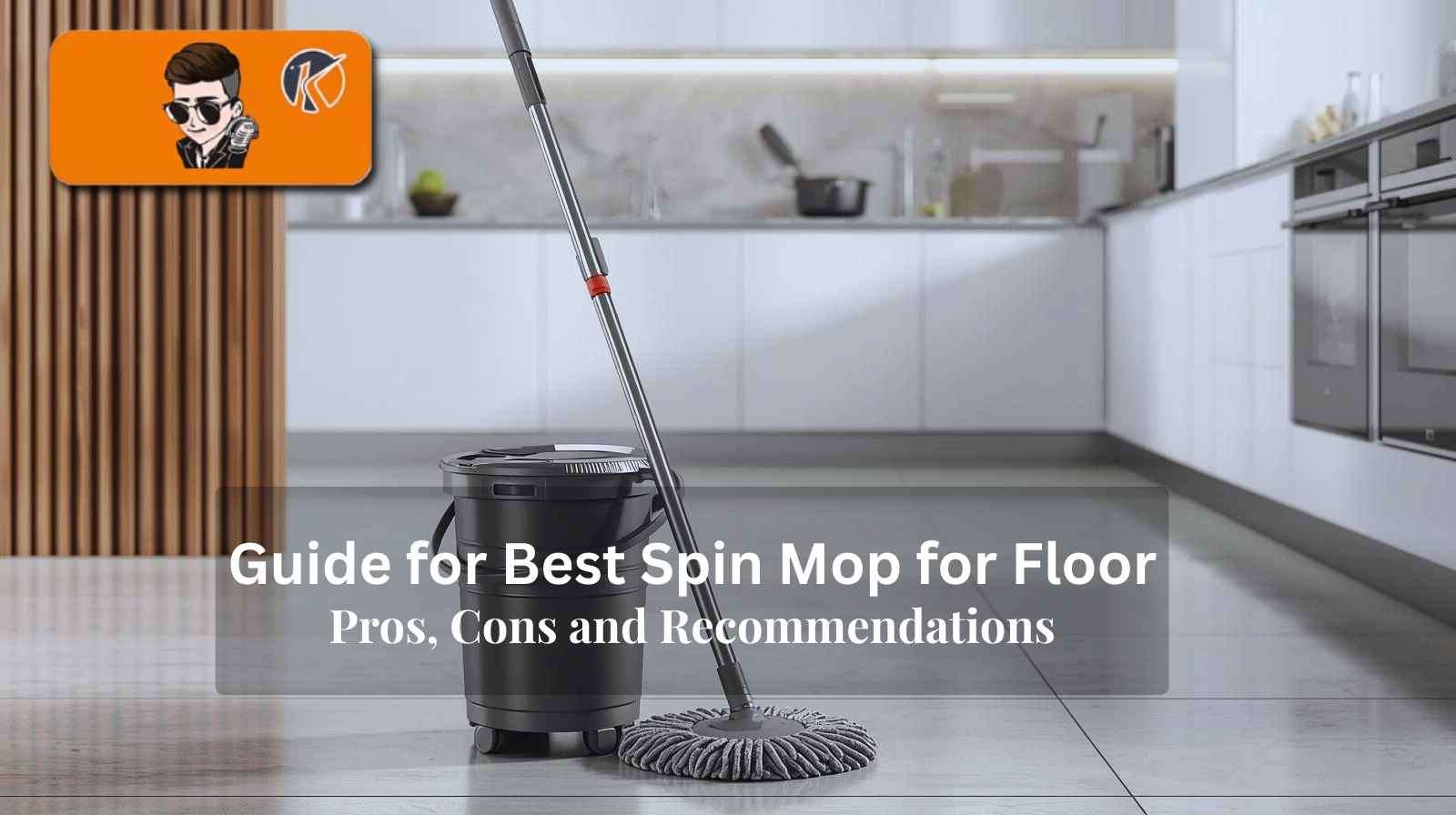
The first time a facility manager switches from a tired string mop to a spin mop, the shift in cleaning efficiency can be quite drastic. The floor dries faster. The staff moves quicker. Complaints fall silent. Spin mops were engineered to solve the mess that traditional mops quietly tolerated for decades. They squeeze and remove water with a controlled intensity that changes how cleaning feels. Not glamorous. But transformative.
This guide does not concern itself with surface-level advice. It drills down into the mechanics, the procurement logic, the wear patterns that most buyers only notice after the first warranty claim lands on the desk.
Understanding Spin Mops and How They Work
A spin mop system has a really simple yet practical design. A microfiber head locks into a rotating wringer basket inside a bucket. Press the foot pedal or push down the handle and the centrifugal force detonates the water outward. Moisture leaves the fibers. Dirt follows it out. The mop returns to the floor damp, not drowning. Clean, not smeared.
That rotation is not for appeal. It is physics applied to hygiene. When the wringer basket spins at speed, water does not merely drip. It is expelled with intent. The result is a controlled moisture level on the mop head, which is the single biggest factor in preventing streaking, warping of laminate, and microbial breeding in damp fibers.
What Makes Spin Mops Different from Traditional Mops
Traditional mops absorb and collect dirt, which is then redeposited dirt across the next ten square meters. Spin mops break this cycle of inefficiency. They rinse aggressively and they remove human error from the process. No more twisting by hand. No more uneven pressure. The spin mop system outputs flawless performance.
There is another advantage which boosts the usage lie of spin mop, making it far longer-lasting than a regular mop. The mop head stays fluffier for longer. Because it is not crushed by brute wringing, the fibers keep their shape. That shape equals surface contact. Surface contact delivers the correct cleaning power.
Common Types of Spin Mop Systems
Spin mop systems are commonly available in two main designs: pedal driven and push pin. Pedal driven spin mops use foot pressure for hands free spinning, offering better control and durability. Push pin spin mops rely on manual downward pressure, making them simpler, lighter, and cost effective for regular cleaning needs.
Pedal-driven Spin Mop
Push Pin Spin Mop
Then there are push-spin systems, where downward pressure on the handle activates the rotation. They are easier to operate, so learning curve is faster. This version has fewer moving parts in the pedal assembly. But often more stress on the handle joint.
Buckets themselves split into compact domestic units and reinforced semi-commercial frames. The latter carry thicker plastic walls, steel axles in the spinner, and larger rinse chambers. They cost more. They survive more.
Pros of Spin Mops
Spin mops appeal to buyers because they adapt to any floor surface. Marble today. Vinyl tomorrow. Sealed wood on Friday. The microfiber heads glide across surfaces that string mops chew apart. They leave floors damp, not soaked. For timber floors this kind of moisture level is perfect for keeping them free from deteriorating faster.
Moreover, they are versatile enough to fit into any setting. Homes love them because they are light and intuitive. Small shops adopt them because training new staff becomes almost unnecessary.
Cons of Spin Mops
Many procurement teams forget the mechanics hiding under that glossy bucket. And the mechanism takes its toll with continuous operation. Pedals grind. Springs fatigue. Bearings loosen. Every spin mop is a small machine, and small machines eventually ask for maintenance.
They also struggle with large scale cleaning tasks. Clean a 40-square-meter café, and the spin mop can do it effortlessly. But clean a huge 1,000-square-meter warehouse and it starts to hit its performance limit. Bucket capacity caps efficiency. Frequent water changes kill the cleaning momentum.
Key Features to Look for in the Best Spin Mop
A Strongly Fixed Buckle
The buckle that locks the mop head into the plate must be solid and reliable. Weak buckles fail without warning. Rotation mechanisms should feel smooth but stubborn, not loose. If the spinner wobbles when dry, it will collapse when wet.
Bucket Size
Bucket capacity is a procurement lever, not a design detail. Larger buckets reduce refill frequency, but they also add weight. The balance between volume and mobility defines user fatigue.
Anti-splash Guards
Anti-splash guards are not decorative rings. They prevent contaminated water from erupting back onto clean fibers during high-speed spins. Water filter grids trap grit before it wreaks havoc on the bearing assembly. Ignore these details and maintenance costs will soar and you will be going for parts replacement sooner then expected.
Best Spin Mop Recommendations
Pedal-Driven Systems for Retail Shops
For retail stores, compact pedal-driven systems with stainless steel spinner baskets dominate for a reason. They fit narrow aisles. They endure daily rough and tough handling. They are much easy to learn to operate, so new staff are not wasting their time troubleshooting the spin mop.
Push-pin systems for Offices
Small businesses and offices benefit from push-spin systems with telescopic handles. These units stow easily in janitor closets and reduce strain injuries. Their simplicity is their main benefit. Fewer parts. Fewer failures.
Comparison: Spin Mop vs Other Mop Types
|
Feature |
Spin Mop |
Flat Mop |
Spray Mop |
String Mop |
|
Moisture Control |
High precision through centrifugal wringing, consistently damp heads |
Moderate, relies on manual wringing or pre-wetted pads |
Low, dependent on trigger spray volume |
Low, absorbs and holds excess water |
|
Cleaning Efficiency |
High on sealed floors, microfiber lifts fine debris |
Good for dusting and light soils |
Best for spot cleaning only |
High for heavy soil but spreads dirty water |
|
Maintenance Load |
Medium, mechanical parts require checks |
Low, pad replacement only |
Low, bottle and trigger wear |
High, heads degrade quickly |
|
Training Requirement |
Minimal, intuitive operation |
Low |
Very low |
Low |
|
Best Use Case |
Homes, retail, small offices |
Commercial dusting, hospitals |
Quick touch-ups |
Industrial or outdoor areas |
Tips for Maintaining Spin Mops
Buckets rot from neglect, not use. Empty the water after every shift. Rinse the spinner basket. Let it dry open. Trapped moisture is a silent saboteur that breeds odor and corrosion.
Mechanical inspections are not glamorous. They are profitable. A weekly check on the pedal tension, the handle joint, and the spinner axle can save a bulk buyer thousands in premature replacements. Listen for squeaks. Feel for slack. Those whispers are warnings.
Buying Guide for Wholesale and Retail Buyers
· Price per unit is a seductive lie. Focus instead on total landed cost, including freight, packaging strength, pallet density, and replacement part pricing. Cheap mops bleed money quietly.
· Treat MOQ as a cash-flow lever, not a hurdle. Low MOQs protect liquidity during market testing. High MOQs only make sense when storage turnover and sell-through velocity are already proven.
· Demand pilot batches before committing to full container loads. Let the product survive real cleaning cycles, not showroom spins.
· Interrogate the warranty like a lawyer. Coverage on pedals, spinner bearings, and handle joints reveals the manufacturer’s confidence level more than any brochure.
· Lock in access to spare parts from day one. Pedal kits, wringer baskets, mop head plates. When these are missing, entire buckets become landfill.
· Ask about packaging engineering. Thin cartons collapse in transit. Broken spinners arrive before sales do.
· Negotiate tiered pricing tied to reorder frequency, not just volume. Suppliers who reward loyalty outperform suppliers who reward one-time bulk gambles.
· Audit lead times ruthlessly. A delayed shipment during peak season does not just hurt sales. It fractures trust with end customers.
· Insist on private labeling and OEM flexibility early, even if branding is not yet urgent. Future differentiation should not require switching factories.
· Finally, measure after-sales support speed. Response time to your first complaint will predict the tone of the entire partnership.
Conclusion
Spin mops are not miracles. They are tools. But they are tools that recalibrate expectations. They turn floor care from drudgery into rhythm. Step. Press. Spin. The floor shines back. Procurement teams who understand the mechanics, the wear curves, the replacement ecosystem do not chase the cheapest quote. They chase uptime. They chase reliability. And in that chase, spin mops stop being products and start becoming systems.