 info@mopnmore.com



 15075866363
Blogs
Mop Bucket Price Guide: Understanding Cost, Quality, and Durability
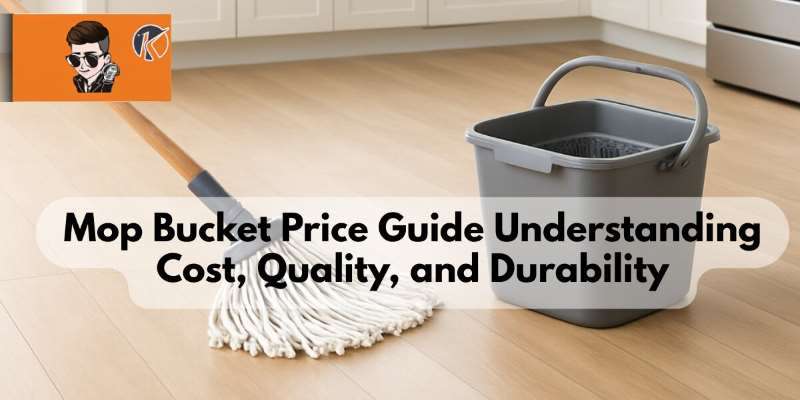
Mop buckets have a simple construction with a pretty basic design. But for commercial buyers, they represent something far more significant: operational efficiency and recurring revenue.
But for commercial users and buyers looking to source mop buckets getting a reasonable pricing option is tricky. The mop bucket market is complex and price quotes vary by a large margin. A seemingly identical product from two different suppliers might differ by forty percent or more, and understanding why separates strategic buyers from those who bleed money on returns, replacements, and frustrated customers.
We are here to make procurement effortless for you and have also included an evaluation framework you need to source confidently.
Understanding What Influences Mop Bucket Prices
Material Types and Their Cost Impact
Material selection dominates the cost equation:
Polypropylene
Polypropylene remains the industry standard. Its lightweight, resistant to most coerosive cleaning chemicals, and impressively affordable at scale. It handles rough use reasonably well. Most mid-range buckets rely on it exclusively.
High-density Polyethylene
Then there's high-density polyethylene. Tougher. More resistant to cracking under cold storage conditions. Manufacturers pay more; you'll pay more. But HDPE buckets outlast their cheaper variants by years in demanding environments.
Metals
Metal components introduce another variable entirely. Stainless steel wringer mechanisms are priced much higher than zinc-plated alternatives. But they also resist corrosion much better. For buyers servicing coastal regions or facilities and using intensive cleaning solutions, the upcharge pays dividends.
Don't overlook reinforced composites emerging in premium lines. These hybrid materials blend plastic durability with structural rigidity that rivals metal frames. The technology is maturing. Prices are dropping. Pay attention.
Design Complexity and Added Features
Simple buckets cost less. Obviously. But feature density has exploded across the category.
Double Chamber
Dual-chamber designs demand precision molding. Side-press wringers require integrated mechanics that single-use molds simply cannot achieve economically. Caster systems particularly industrial-grade wheels with sealed bearings add manufacturing steps and material costs contributing to a higher price tag.
Ergonomic Handles
Another feature that maker user-friendliness better are ergonomic handles. Memory-foam grips. Splash guards engineered to reduce floor contamination. Each innovation addresses real operational pain points, and each carries cost implications. The question isn't whether features add value. The question is which features your specific customers actually need.
Volume Indicators
Volume indicators seem useless or a frivolity. But their value is only realized once a janitorial team realizes they've been mixing solutions incorrectly for months. Color-coding systems prevent cross-contamination in healthcare settings. These details matter enormously. And they justify premium positioning when properly communicated.
Types of Mop Buckets
Single-Compartment Mop Buckets
Single-compartment buckets sit at the entry level. One basin. One wringer. Minimal components. Prices stay low because manufacturing is straightforward and materials are minimal. These buckets work in small retail spaces, offices with limited cleaning cycles, or residential-adjacent commercial settings. They struggle in high-volume environments. Overloading is common. Water contamination happens quickly. Low price. Narrow margin for misuse.
Double or Partitioned Mop Buckets
Partitioned buckets introduce separation between clean and dirty water. This improves cleaning efficiency and reduces re-soiling. It also raises production cost. Additional walls require stronger structural integrity. Mold complexity increases. Assembly precision matters more. Prices move into the mid-range. For retail stores, clinics, and hospitality environments, this category balances cost with operational improvement. Fewer water changes and better hygiene outcomes.
Heavy-Duty Industrial Mop Buckets
Featuring thick walls. Reinforced wringers. Large capacity. Oversized casters. Everything is heavier because everything must survive. Pricing reflects that intent. These buckets cost more because they are engineered for warehouses, hospitals, airports, and factories where downtime is unacceptable. They are not flexible. They trade elegance for endurance.
Cost vs Quality: What Buyers Should Look For
Strength and Efficiency of the Wringing System
Wringers are the component that re first to fail. This is where quality separation becomes painfully obvious.
Low-cost wringers use thin plastic components that crack under repetitive stress. Pivot points wear. Pressure distribution degrades. Within months, staff struggle to extract water effectively, leaving floors dangerously slick while extending drying times.
Quality wringers incorporate reinforced leverage systems, metal pivot pins, and graduated pressure zones that maintain consistent performance across their lifespan. They cost more upfront. But they also generate fewer complaints, fewer returns, and vastly fewer liability concerns from slip-and-fall incidents.
As a bulk buyer remember to test wringer mechanisms before committing to supplier relationships. Stress-test them aggressively. The difference reveals itself immediately.
Service Life and Maintenance Requirements
Cheap buckets demand replacement. Quality buckets demand only occasional parts replacement. Evaluate modular design philosophy during supplier assessment. Can customers replace worn casters without purchasing entirely new units? Are wringer assemblies serviceable, or welded permanently into disposable configurations?
Maintenance accessibility transforms cost calculations. A hundred-dollar bucket lasting five years with twenty dollars in replacement parts is hugely better than a thirty-dollar bucket requiring annual replacement.
Comparing Low, Mid, and High-Range Mop Bucket Prices
|
Category |
Material Quality |
Wringer Durability |
Caster Performance |
Best Applications |
Expected Lifespan |
|
Budget Mop Buckets |
Thin-walled basic polypropylene |
Basic plastic mechanisms prone to cracking under stress |
Entry-level casters that wobble within weeks of use |
Temporary facilities, event operations, backup inventory, light-duty occasional use |
6-12 months under regular use |
|
Mid-Range Mop Buckets |
Measurably thicker walls with improved polypropylene or HDPE blends |
Substantially improved with reinforced pivot points |
Commercial-grade casters handling real-world rolling distances |
Daily commercial deployment, offices, retail spaces, standard janitorial operations |
2-4 years with proper maintenance |
|
Premium Mop Buckets |
Superior certified materials with industrial-grade composites or reinforced HDPE |
Heavy-duty assemblies with metal components and extended warranties |
Industrial-rated sealed bearings designed for continuous high-traffic use |
Healthcare facilities, food service (NSF compliant), hospitality, manufacturing plants, high-traffic environments |
5+ years with replaceable components |
Sources: Reddit, Amazon, Accio
How Durability Impacts Long-Term Value
Consistent Cleaning Performance
Durability isn't something vague. It's measurable in cleaning outcomes that remain stable month over month. Buckets that maintain clean and unclean water separation, wringers that extract consistently, casters that roll smoothly; all these factors determine whether cleaning staff achieve results or merely go through motions.
Degraded equipment degrades performance. Degraded performance triggers complaints, rework, and eventually customer defection. During bulk price negotiation cconnect durability directly to operational outcomes for getting a better bargain.
Better Workload Handling in High-Traffic Environments
Hospitals. Airports. Schools. Manufacturing plants. Environments where equipment faces relentless everyday usage will reveal whether the buckets are of genuine quality or not. Premium durability isn't luxury option in these operating environments. They actually increase the service life.
Price Considerations for Wholesale and Retail Buyers
Shipping, Packaging, and Storage Costs
Buckets are bulky. Shipping costs can rival product costs on low-margin units; a reality that devastates profitability when overlooked.
Negotiate freight aggressively for getting a good deal. Evaluate suppliers offering regional distribution points that reduce transit distances. Consider flat-pack designs where assembly complexity is minimal. Storage footprint matters in warehouse environments where space carries real costs.
Supplier Reliability and After-Sales Support
The cheapest quote means nothing from suppliers who miss delivery windows, ship inconsistent quality, or vanish when warranty claims arise.
Reliability commands premium. Pay it willingly. Your downstream customers depend on your supply consistency, and that consistency begins with supplier selection discipline.
How to Evaluate Mop Bucket Suppliers
Certifications and Quality Standards
ISO certifications establish baseline manufacturing discipline. NSF certification matters enormously for food service applications. Healthcare buyers increasingly require antimicrobial compliance documentation.
Request certifications proactively. Verify them independently. Uncertified suppliers may offer compelling pricing while exposing your business to liability risks that dwarf any savings.
Production Capacity and Lead Times
Can the supplier scale when your demand spikes? What happens during peak seasons when every buyer competes for allocation? Evaluate production capacity documentation, understand realistic lead times under varying demand scenarios, and establish contingency supplier relationships for critical SKUs. Supply disruptions transfer directly into lost sales and damaged customer relationships.
Conclusion
Mop bucket procurement requires strategic thinking. The buyers who thrive understand that price represents only one dimension of the total value. And in many cases, it is the least important dimension for commercial customers.
Material selection, design sophistication, and supplier reliability all these factors build up across purchasing cycles and the final result is sourcing that is efficient and cost-effective.
Build transparent supplier relationships. Demand quality documentation. Test products rigorously before committing inventory capital. And remember always that your customers' success depends directly on the products you place in their operations.